
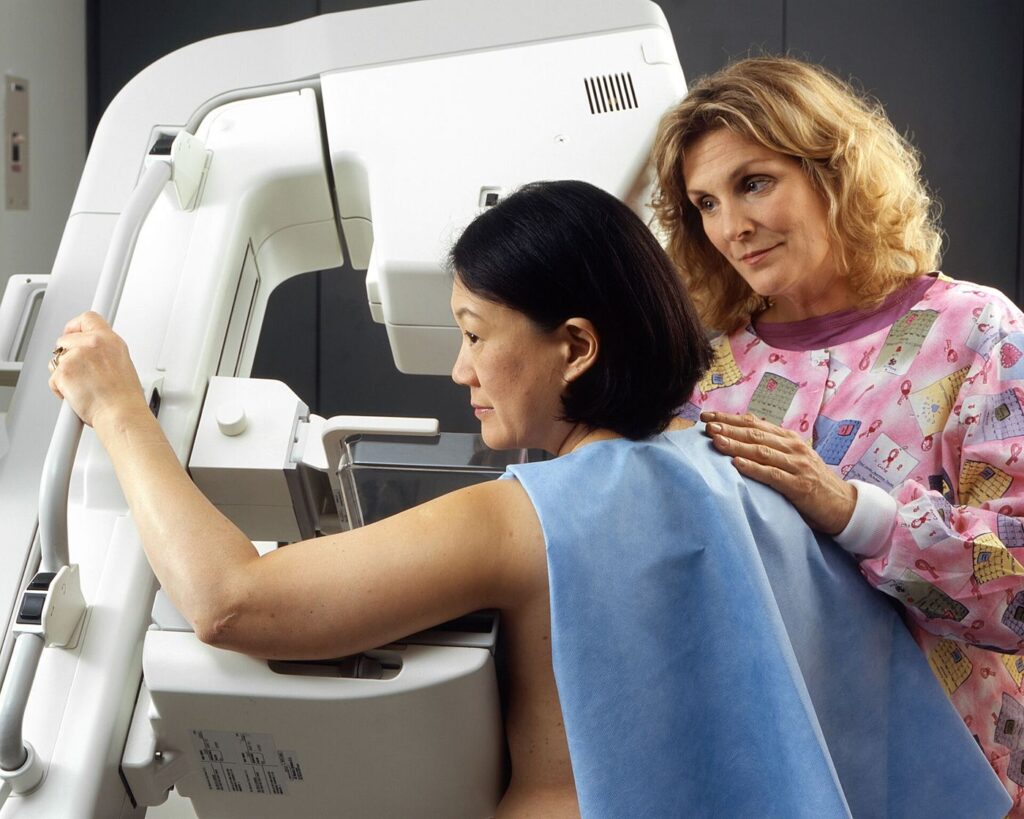
RadNet’s DeepHealth unit has won United States Food and Drug Administration clearance for Mammo Risk, an artificial intelligence tool that predicts a woman’s breast cancer risk from a routine 3D mammogram. The clearance was reported on 25 November 2026, and Mammo Risk is the first FDA-cleared image-based breast cancer risk prediction tool for 3D mammography. The software predicts risk over three, four and five years, helping doctors plan more personalised screening, including whether extra imaging is needed. It was trained on 220,000 mammogram studies and is now commercially available to American healthcare providers as part of DeepHealth’s Radiology AI Suite.
What the Evidence Shows
The clearance marks a shift in medical AI from spotting disease that is already there to predicting risk before it appears, which could change how screening is organised. Most women are screened on a fixed schedule, but a reliable risk score could mean closer monitoring for those at higher risk and less frequent testing for those at low risk. DeepHealth says the launch moves the company beyond cancer detection towards more preventive care. RadNet recently agreed to acquire ONRAD, a teleradiology provider, for 350 million dollars in cash and five million RadNet shares, as it builds a larger radiology business around its AI tools. Reporting and analysis from sources such as IEEE Spectrum track the same developments, and specialists following the FDA clearance for Mammo Risk say the direction is now consistent across independent lines of evidence.
The Wider Context
Adoption of the FDA clearance for Mammo Risk follows a familiar pattern with an unfamiliar speed. Early users tolerate rough edges in exchange for advantage, mainstream users arrive when the tool disappears into existing workflows, and the market consolidates around whoever made that transition feel effortless. Vendors are racing less on raw performance now than on integration, support and trust.
What Happens Next
The realistic forecast for the FDA clearance for Mammo Risk is steady integration rather than sudden replacement: embedded in products people already use, improving in increments, and regulated in proportion to its reach. The companies and institutions that plan on that basis, training staff and redesigning processes instead of chasing launches, are the ones the adoption data tends to vindicate. You can follow related developments in our coverage of technology.
It is also worth remembering how quickly the picture in this area has changed before. Positions that looked settled a few years ago have been revised as new data arrived, and the same humility is appropriate now. The strongest coverage of this subject, and the most useful advice, tends to come from sources that update their views openly when the facts move, rather than defending an earlier position long after it has stopped fitting the evidence available.
None of this will be settled by a single announcement, study or product launch. The pattern to watch is accumulation: independent confirmations, honest reporting of failures and steady improvement in the underlying numbers. Readers who follow those signals, rather than the loudest claim of the week, will understand this subject better than most of the commentary surrounding it suggests is possible.
